Home › Common Problems › Basement Floor Cracks
Basement Floor Cracks
in Ann Arbor, MI
Most Ann Arbor homes have a basement floor poured on top of a gravel base over clay soil. When that clay soil dries out in summer or gets saturated in wet springs like the ones common in Washtenaw County, it moves. That movement cracks the floor. Some cracks are nothing to worry about. Others mean the slab is moving from below and will let water in if left alone.
Ann Arbor Concrete Repair Pros helps Ann Arbor, MI homeowners fix basement floor cracks — call for a free inspection.
Quick Answer
Basement floor cracks in Ann Arbor are most often caused by the concrete shrinking as it dried after it was poured, or by the clay soil underneath shifting. Most shrinkage cracks are cosmetic. Cracks that are wide, uneven, or wet are a different problem and need a closer look. Call (734) 272-4046 if water is coming up through the crack or if one side of the crack is higher than the other.
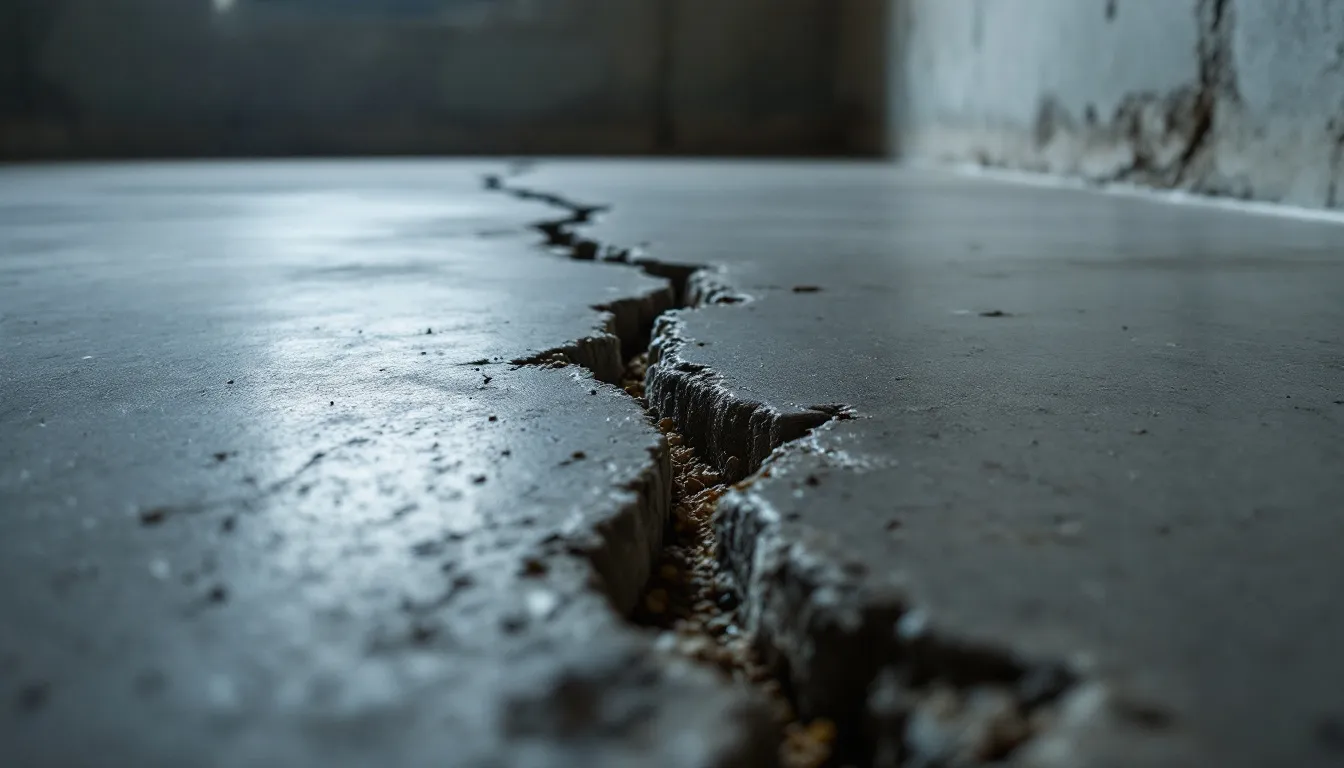
Telltale Signs
Warning Signs to Watch For
- Thin hairline cracks running in a straight line across the floor
- Cracks that are wider in the middle than at the ends
- One side of the crack is higher than the other side
- Water seeping up through the crack after heavy rain
- White chalky deposits along the crack from mineral buildup
- Cracks spreading from the corner of the floor toward the center
Root Causes
What Causes Basement Floor Cracks?
Concrete shrinkage during curing
When a basement floor is poured it shrinks slightly as the water in the mix dries out. This is normal and creates thin, shallow cracks. These cracks do not affect structure but they do let in moisture over time if left open.
The Fix
Epoxy or Polyurethane Crack Injection
Low-viscosity epoxy or polyurethane is injected into the crack under pressure to fill it completely. Epoxy bonds the concrete back together. Polyurethane stays flexible and handles minor future movement better.
Clay soil heave below slab
The clay soil under basements in Ann Arbor expands when wet and contracts when dry. When it pushes up unevenly, it lifts one section of the slab while another stays put. That differential movement causes cracks where the slab bends.
The Fix
Slab Stabilization and Crack Repair
The cause of the moisture feeding the clay is addressed first, then the crack is routed clean and sealed. If sections have heaved significantly, grinding down the raised edge prevents tripping and water pooling.
Hydrostatic pressure from groundwater
During heavy spring rains or snowmelt, groundwater builds up around and under the foundation. In low-lying parts of Ann Arbor near the Huron River, this water pressure pushes up through the floor slab. Water follows the path of least resistance, which is usually an existing crack.
The Fix
Interior Drain Tile System Installation
A channel is cut around the perimeter of the basement floor and a perforated pipe is installed to collect water before it reaches the slab. The water is routed to a sump pump and discharged outside.
Self-Diagnosis
Which Cause Applies to You?
Check the signs you're observing to narrow down the likely root cause before your inspection.
| What You're Seeing | Concrete shrinkage during curing | Clay soil heave below slab | Hydrostatic pressure from groundwater |
|---|---|---|---|
| Crack is thin, dry, and has not changed in years | |||
| One side of crack is raised higher than the other | |||
| Water comes up through crack after rain or snowmelt | |||
| White mineral deposits along the crack edges | |||
| Crack runs from corner of floor toward the drain |
Free Quote
Get a free quote in Ann Arbor
No obligation — tell us what's going on and we'll text you back shortly.
Other Problems
Services That Fix This
Basement Floor Cracks Near You
Also Helpful