Home › Common Problems › Garage Floor Spalling and Scaling
Garage Floor Spalling and Scaling
in Ann Arbor, MI
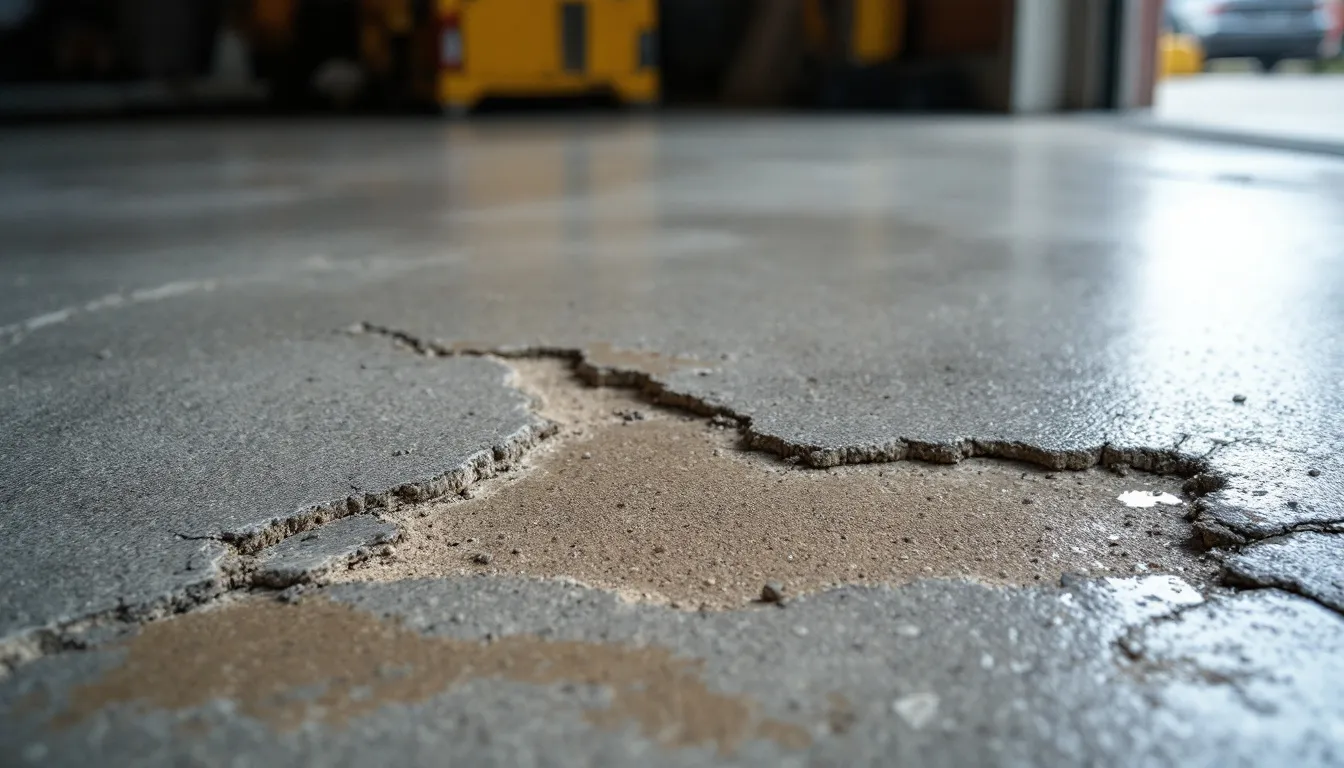
Spalling and scaling is what happens when the surface layer of a garage floor starts to break apart and flake off. Ann Arbor winters mean cars park in garages carrying road salt from streets that get heavily treated between November and March. That salt soaks into the concrete, draws in moisture, and then freezes. The surface layer pops off in chunks or thin flakes, and each winter takes more with it.
Ann Arbor Concrete Repair Pros helps Ann Arbor, MI homeowners fix garage floor spalling and scaling — call for a free inspection.
Quick Answer
Garage floor spalling means the top surface of the concrete is flaking and breaking off. In Ann Arbor, this is almost always caused by road salt and deicer being tracked in by cars combined with freezing temperatures inside the garage. The fix is to remove the loose material, repair the base, and apply a resurfacing layer or protective coating. The longer you wait, the deeper it goes.
Telltale Signs
Warning Signs to Watch For
- Gray or concrete-colored flakes and chunks on the garage floor surface
- Rough, pitted texture where the surface used to be smooth
- Exposed aggregate, meaning you can see the small stones inside the concrete
- Damage that gets noticeably worse each spring
- Surface breaking up faster near the garage door where cars drip
Root Causes
What Causes Garage Floor Spalling and Scaling?
Road salt and deicer infiltration
Cars track in road salt from Ann Arbor streets after every winter treatment. That salt dissolves in water, soaks into the concrete surface, and lowers the freezing point of the water inside the pores. This creates additional freeze-thaw stress right at the surface and the top layer breaks off.
The Fix
Concrete Resurfacing with Protective Sealer
Loose material is ground or shot-blasted off down to solid concrete. A bonded resurfacing compound is applied at a consistent thickness and then sealed with a penetrating silane or epoxy coating to block future salt infiltration.
Low-quality original concrete mix
Garage floors poured in tract homes built in the 1950s and 1960s across areas like Pittsfield Township often used a mix with too much water added at the job site to make it easier to pour. That extra water created a weak surface layer that wears away under any salt or freeze-thaw exposure.
The Fix
Full Floor Replacement
When the damage goes deep enough that a resurfacing layer has nothing solid to bond to, the floor needs to be broken out and replaced. The new pour should use a low water-to-cement ratio and be cured properly before any vehicles park on it.
Self-Diagnosis
Which Cause Applies to You?
Check the signs you're observing to narrow down the likely root cause before your inspection.
| What You're Seeing | Road salt and deicer infiltration | Low-quality original concrete mix |
|---|---|---|
| Damage is worst near the garage door and drip line | ||
| Flaking goes deeper than a quarter inch and exposes stone aggregate | ||
| Surface was always rough and dull even when the house was newer | ||
| Damage has spread quickly over just 2 or 3 winters | ||
| Resurfacing done before failed and peeled off within a year |
Free Quote
Get a free quote in Ann Arbor
No obligation — tell us what's going on and we'll text you back shortly.
Other Problems
Services That Fix This
Garage Floor Spalling and Scaling Near You
Also Helpful